


Original Post | Step 1 | Step 2 | Step 3 | Step 4 | Step 5
We’re now at Step 6 in the “10 Steps to Get Your PeopleSoft System Ready to Move to a SaaS Solution” series. Up to this point, we’ve focused on understanding your system, evaluating what should change, and modernizing how data flows. Now we shift to a technical step that has an enormous strategic payoff:
Upgrade to the latest PeopleTools version before you migrate.
If you’re more than a version behind, this isn’t optional. Newer PeopleTools releases introduce key features that make your system easier to integrate, easier to support, and far more “cloud-ready.” Skipping this step doesn’t just delay progress; it makes every future decision harder, whether you’re moving to SaaS, adopting a hybrid approach, or simply modernizing PeopleSoft itself.
Here are five reasons upgrading PeopleTools now gives your organization a major advantage.
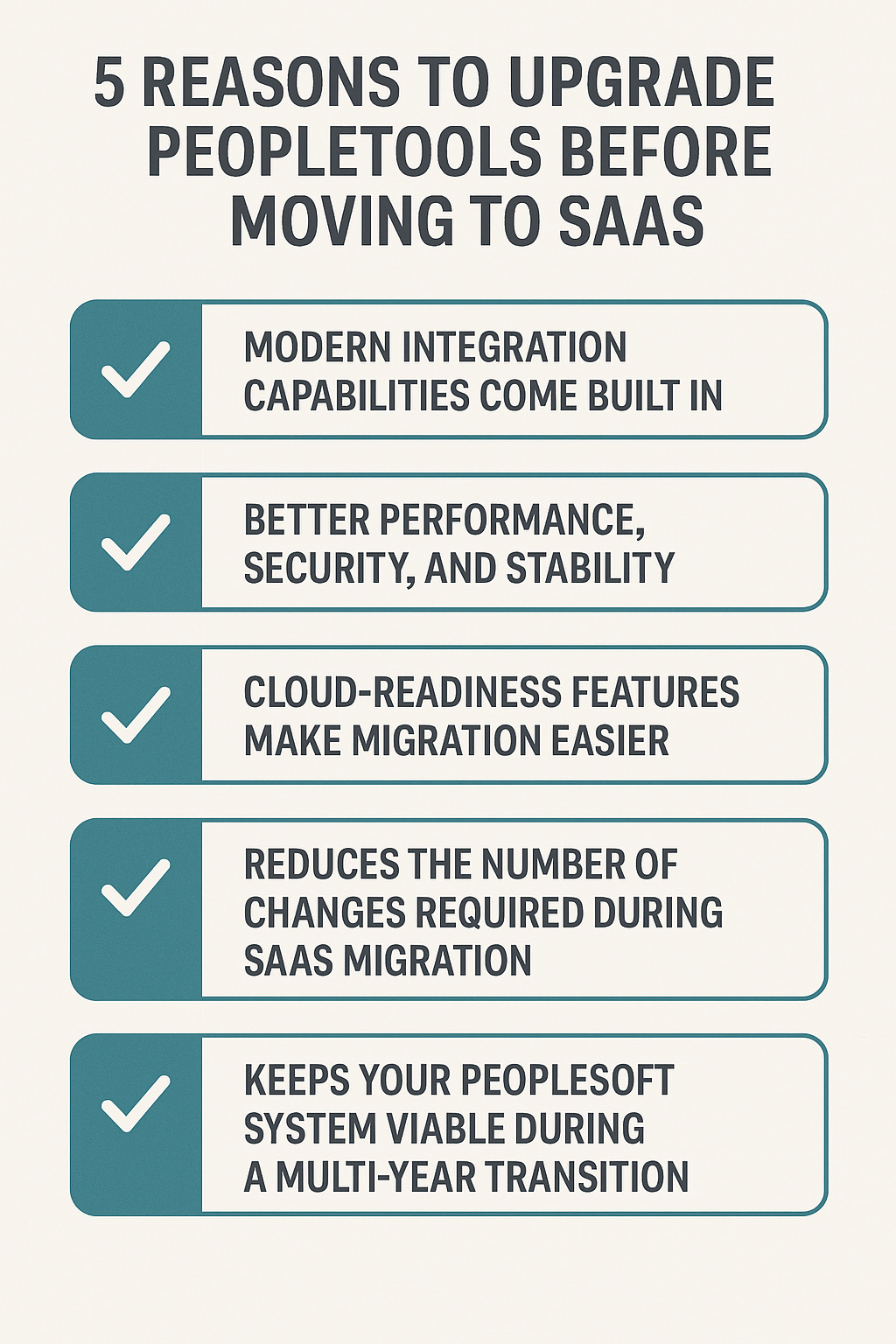
1. Modern Integration Capabilities Come Built In
Newer PeopleTools versions bring significantly improved REST capabilities, JSON handling, event publishing, and better Integration Broker performance. These improvements matter because SaaS platforms rely heavily on API-driven communication. If your PeopleSoft environment can’t speak modern integration languages, your SaaS transition becomes more complicated, expensive, and brittle.
Upgrading PeopleTools unlocks the tools you need to build a clean, future-ready integration layer.
2. Better Performance, Security, and Stability
Each new PeopleTools release includes patches, performance improvements, security updates, and optimizations that directly affect system health. Many organizations underestimate the technical debt that accumulates when they stay on older PeopleTools versions. This impacts everything from outdated Java libraries to unsupported web server versions.
A PeopleTools upgrade gives your environment a fresh foundation, stabilizing it before you begin more intensive modernization work.
3. Cloud-Readiness Features Make Migration Easier
Oracle continues to enhance PeopleTools with features that align with cloud hosting and containerization models. This includes improved logging, enhanced monitoring hooks, and better compatibility with reverse proxies and load balancers. These additions don’t just help if you’re moving to OCI. They help if you plan to host PeopleSoft on AWS, Azure, GCP, or even a private cloud.
Upgrading means your PeopleSoft environment plays better in a cloud-first world. This is true even if you’re not fully migrating yet.
4. Reduces the Number of Changes Required During SaaS Migration
If you don’t upgrade now, you’ll eventually be forced to do it during the SaaS transition, and that’s the worst time to tackle it. PeopleTools upgrades require testing, validation, and coordination across multiple teams. Doing it in the middle of a SaaS project compounds risk and spreads your team too thin.
Upgrading now clears the runway. It removes one of the major blockers so your SaaS timeline doesn’t get bogged down in PeopleSoft technical work.
5. Keeps Your PeopleSoft System Viable During a Multi-Year Transition
Most organizations don’t move to SaaS all at once. They move in phases. That means PeopleSoft will likely coexist with SaaS platforms for several years. During that time, PeopleSoft still needs to run smoothly.
Staying current on PeopleTools ensures:
Integrations stay compatible
Organizational security posture remains strong
Performance stays predictable
Your support team isn’t maintaining obsolete code paths
You can’t run a hybrid ERP strategy on outdated infrastructure.
🎯 Why This Matters
A PeopleTools upgrade isn’t just technical housekeeping; it’s strategic preparation.
It gives you the APIs, performance, stability, and cloud alignment you need to transition cleanly into the SaaS era.
Think of it like updating your foundation before remodeling your house.
If the underlying structure is outdated, the new work won’t hold.